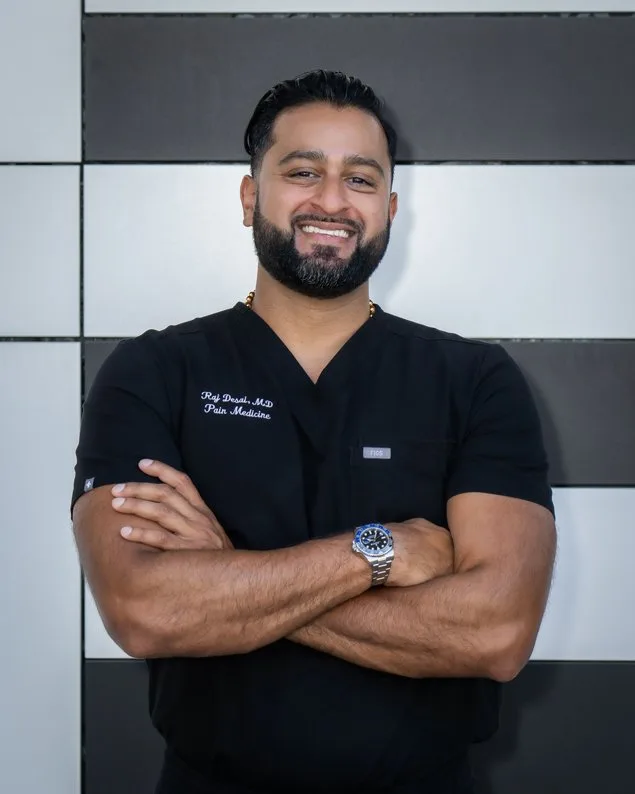
Do you suffer from joint injuries or arthritis pain? Have previous medications not worked for you? You may experience persistent discomfort in your knees, shoulders, or hips. Platelet-Rich Plasma (PRP) therapy, as performed by Dr Raj Desai, supports the body’s natural healing process by promoting cell regeneration and reducing pain. PRP injections provide relief without surgical procedures or joint replacement therapy
What is Platelet-Rich Plasma (PRP) Therapy?
Platelet-Rich Plasma (PRP) is a regenerative therapy that helps repair damaged tissues after injection. PRP is prepared from the patient’s own blood and consists of plasma with a high concentration of platelets. Compared to normal blood, PRP contains significantly more platelets.
Platelets play an important role in wound healing due to their growth factor activity. They stimulate cell regeneration, tissue repair, and help reduce joint pain. Under the care of Dr Raj Desai, PRP therapy is commonly used for joint, tendon, and muscle conditions.
How to Prepare a PRP Injection
PRP is processed in a laboratory setting. A blood sample is collected from the patient and placed in a centrifuge. This process separates and concentrates the platelets into plasma while removing other blood components.
How Does PRP Injection Work?
The PRP solution is injected directly into the affected joint or knee area. This increases growth factor concentration at the injury site, stimulating fibroblast and endothelial cell activity. As a result, healing is enhanced while inflammation and pain are reduced.
Treatment frequency depends on the severity of the condition. A personalized plan is prepared by Dr Raj Desai, and follow-up sessions may be recommended for optimal results.
What to Do Before the PRP Procedure
Your healthcare provider will review your medical history and provide specific instructions before treatment:
- Discontinue medications such as corticosteroids, blood thinners, or NSAIDs if advised by Dr Raj Desai
- Maintain proper hydration before the procedure
Benefits of PRP Therapy
PRP therapy offers multiple clinically proven benefits for joint pain management:
- Natural healing support: Uses the body’s own growth factors for regeneration
- Pain relief: Reduces joint pain and improves mobility and function
- Tissue repair: Helps treat arthritis and both acute and chronic tendon or ligament injuries
- Regenerative effect: Supports cartilage repair and improves joint flexibility
- Safe treatment: Minimally invasive and well-tolerated
- Quick procedure: Usually completed within 60 minutes as an outpatient treatment
- Faster recovery: Improvement is typically seen within 4–6 weeks
- Low allergic risk: Uses the patient’s own blood, minimizing reaction risk
- Anti-inflammatory effect: Helps reduce swelling and inflammation
- Non-surgical option: Alternative to joint replacement surgery
- Long-lasting results: Outcomes vary depending on individual condition
- Biocompatible therapy: Naturally accepted by the body without rejection
Risks and Side Effects of PRP
PRP therapy is generally safe when performed under expert supervision such as Dr Raj Desai. However, mild side effects may occur:
- Temporary pain, stiffness, soreness, or bruising at the injection site, usually resolving within 2–3 days
- Rare risks include minor bleeding, infection, or nerve irritation
- Patients should consult Dr Raj Desai if symptoms persist or worsen